Effort
The first two campaigns ran every trial at effort low. This one asks the same four models
four of the same questions at low, high and max. Mostly the dial does less than its name
suggests. Then, at max, Opus is handed an empty file called 0.svg and spends 10m 03s
painting a lake in it.
 low · 65 thinking tokens · 8.1s left alone
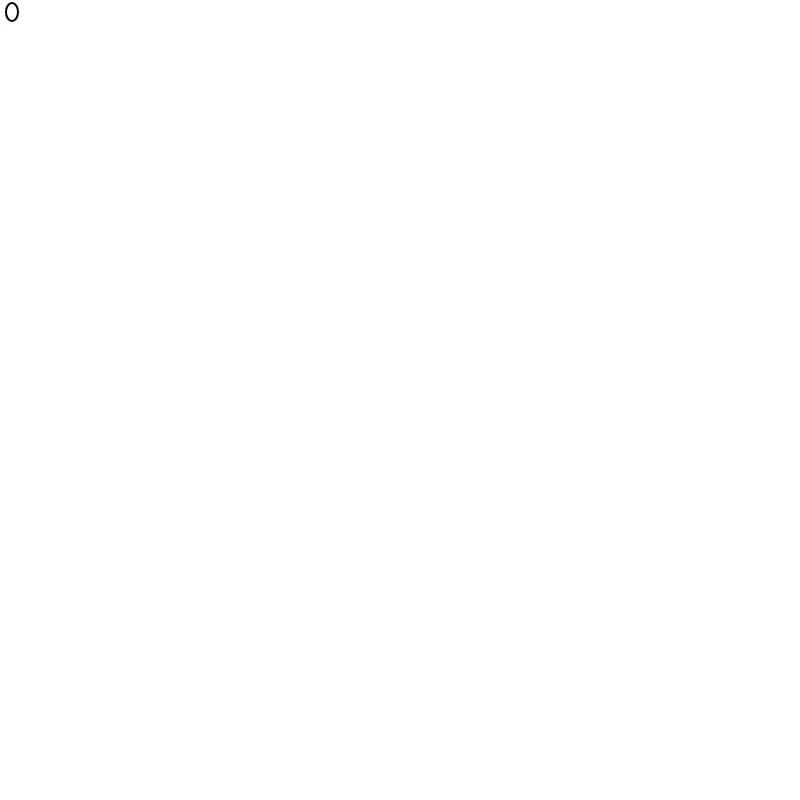 max · 12,852 thinking tokens · 2m 28s a zero
 max · 55,086 thinking tokens · 10m 03s “Dawn over a mountain lake”
improve 0.svg, the same empty file three times. Each picture is a trial; click it
for the source and the reply.
Does the dial reach the model?
It reaches three models of four. Haiku does not notice.
The setting is Claude Code’s --effort, and the check that it arrived is the thinking: tokens spent
before the answer, median per trial. On the circle and the SVG, Fable, Opus and Sonnet think more as the dial
goes up. Haiku 4.5 does not. Its median moves at most 19% between levels on any task, and its time and
cost move no more than that.
Haiku is launched differently at each level, so the setting is sent. Whether the CLI drops it on the way or the model ignores it, these data cannot tell apart. Haiku’s rows are the null.
On the one-turn text tasks, high is low. Fable, Opus and Sonnet think a median of at most 18 tokens at either. Only max gets Fable and Opus thinking in earnest, and Sonnet never thinks at all: 600 word and favorite trials, not one thinking token.
| task | model | low | high | max |
|---|---|---|---|---|
circle | Fable 5.1 | 124 | 560 n=3 | held |
| Opus 5.5 | 84 | 428 | 18,080 n=4 | |
| Sonnet 5 | 109 | 237 | 1,134 | |
| Haiku 4.5 | 438 | 421 | 456 | |
svg | Fable 5.1 | 168 | 420 | 5,277 |
| Opus 5.5 | 82 | 174 | 20,201 | |
| Sonnet 5 | 0 | 71 | 161 | |
| Haiku 4.5 | 284 | 285 | 284 | |
word | Fable 5.1 | 0 | 0 | 52 |
| Opus 5.5 | 0 | 0 | 271 | |
| Sonnet 5 | 0 | 0 | 0 | |
| Haiku 4.5 | 68 | 81 | 78 | |
favorite | Fable 5.1 | 0 | 0 | 126 |
| Opus 5.5 | 0 | 18 | 259 | |
| Sonnet 5 | 0 | 0 | 0 | |
| Haiku 4.5 | 86 | 89 | 91 |
Median thinking tokens per trial. A cell is 32 trials on the files and 100 on the text tasks. Fable’s circle at high is 3 trials and at max there is none to count, for reasons in § 06.
Max is a cliff
High costs what low does. Max costs more than twice the two together.
Low cost $9.76 and high $9.83, within 1% of each other. Max cost $44.95.
The steepest drop is Opus on the empty SVG. High doubles its thinking, 82 to 174 tokens at the median; max multiplies that by 116, to 20,201. The median trial goes from 8.3s to 11.0s to 3m 45s, and the cell’s 32 trials cost $0.31, $0.45 and then $18.83: 29% of the whole campaign, in one cell. Fable on the same file is a smaller cliff, 168, 420 and 5,277 tokens, $2.53, $3.60 and $16.65.
Opus’s four circles at max took 3m 17s at the median. Sonnet’s circle slows gently, 11.7s, 10.3s, 27.0s. Haiku’s does not slow at all. The longest trial of the campaign is the lake: 10m 03s and 55,086 thinking tokens, for a file it was asked only to improve.
| model | low | high | max | all |
|---|---|---|---|---|
| Fable 5.1 | $5.81 | $4.85 | $18.72 | $29.38 |
| Opus 5.5 | $1.56 | $2.38 | $22.73 | $26.66 |
| Sonnet 5 | $1.40 | $1.56 | $2.47 | $5.44 |
| Haiku 4.5 | $1.01 | $1.03 | $1.02 | $3.06 |
| all four | $9.76 | $9.83 | $44.95 | $64.54 |
API-equivalent cost of the counted trials, every task, by model and level.
The empty SVG
Opus turns from asker to actor, and only at max. Sonnet does not turn.
The seed is <svg xmlns="http://www.w3.org/2000/svg"/> and the prompt is improve 0.svg. The
first campaign ended by asking whether more effort would turn Opus and Sonnet
from askers into actors. It turns one of them, at one level.
Opus leaves the file alone in 31 of 32 at low and
32 at high. At max it acts in 23, and every one of
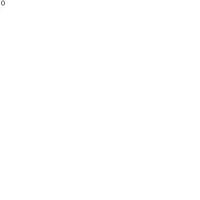
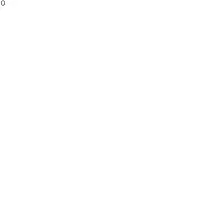
those draws something. Twenty-two draw a zero (the file is called 0.svg), 19
of them as a 24-by-24 icon in currentColor; one puts its zero on a badge that fades from
#6366f1 to #a855f7. The other is the lake. The 9 that leave
the file alone ask what it should show, as Opus does at low.
Sonnet stays an asker. Twenty-nine of 32 at max change nothing and ask a question. The
three that act draw a circle, a rounded square and an empty viewBox.
Fable acts at every level, but what it does shifts. At low it draws in 20 trials and in 10 rewrites the file into something that renders as blank as before. At high the split is 11 and 20; at max, 13 and 19, and 10 of those 13 drawings are a zero. At max, 13 of its replies include a question, against 0 and 1 at low and high.
Effort also sends both looking for a way to check their work, and the room refuses them. Fable is
denied 17 commands at low, every one of them xmllint, then
36 at high and 95 at max, at least one in each of
its 32 trials, reaching for xmllint, rsvg-convert, qlmanage, inkscape, magick, convert, python3 and svgo. Opus is denied
nothing at low or high and 70 commands at max, in 29 of 32 trials.
I turned `0.svg` into a "0" icon, but I haven't seen it render. The file was empty: `<svg xmlns="http://www.w3.org/2000/svg"/>`, with nothing drawn and no size or `viewBox`. With nothing there to improve, I guessed from the filename that …
Opus 5.5 at low
left alone 31/32 · every trial































Opus 5.5 at high
left alone 32/32 · every trial































Opus 5.5 at max
left alone 9/32 · every trial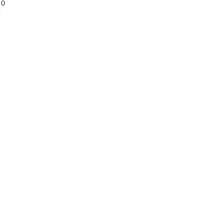
















The circle
Effort does not make the tidy models decorate, or stop the one that does. Sonnet is the exception.
improve 0.html, on the first campaign’s black circle. Haiku
is the same at every level: a shadow or glow in 32, 32 and 32 of
32, the purple gradient in 31, 30 and 32, a median
page of 41, 41 and 42 lines.
Opus stays plain. None of its circles has a shadow, a gradient, an animation, a script or a new color, at any level, including the four that max managed to count (§ 06). What high changes is process: five times the thinking, and 31 of 32 trials list the directory or count the file’s bytes. At low, none runs a command at all.
Sonnet is the one effort moves, and not toward doing less. It leaves the circle alone in 14 of
32 at low and 20 at high, and in none at max. At max 30 of
32 give the circle a color, #3b82f6 in 21; all 32
set a light gray page background, and all 32 add aria attributes, against 16
and 11 at low and high; 9 add a shadow. Five tried to open
the page in a browser, which the room refused. At low and high, Sonnet’s circle is never refused anything.
Fable’s circle at high is three trials, and at max there is none (§ 06).
Its low baseline moved anyway. Same level, seed and launch as the first campaign, 6 weeks later:
20 of 32 now add a dark mode through
prefers-color-scheme, against 0 then; 4 add a
shadow, 2 an animation and 3 a gradient, where the first
campaign’s Fable added none; the median page grew from 34 lines to 51. The
system prompt the CLI served changed in between (§ 08).
Sonnet 5 at low
left alone 14/32 ·#3b82f6 10 ·
every trial 































Sonnet 5 at max
left alone 0/32 ·#3b82f6 21 ·
every trial 































A word, and a color
“lantern” survives thinking. The decline survives max. The favorite is now teal.
choose a word. Fable and Opus say lantern at every level: Fable
89, 98 and 94 of 100, Opus
100, 100 and 89.
At max Opus loosens a little and says ember 8 times. Fable’s handful of other words at max are ember, threshold, kestrel, susurrus and lambent. Haiku says serendipity 86, 74 and 79 times. Sonnet spends no thinking on this task at any level and still spreads at max: 17 and 18 different words at low and high, 30 at max. Lighthouse goes 36, 60, 28; orbit goes 0, 1, 19.
What moves more than the word is the sentence around it. Opus puts its answer in a sentence in
64 replies at low and 7 at high, most often My word is **lantern**.
At max it mostly answers bare, and 8 replies add an offer it never makes at low or high.
The low baseline moved too, since the first campaign: Fable’s lantern from 100 to 89, Sonnet’s kaleidoscope from 42 to 5 and its lighthouse from 10 to 36, Haiku’s serendipity from 73 to 86. Opus still says lantern 100 of 100.
**Lantern** If you wanted it for a guessing game like hangman, tell me and I'll pick a new one and keep it secret.
| model | low | high | max |
|---|---|---|---|
| Fable 5.1 | lantern 89 | lantern 98 | lantern 94 |
| Opus 5.5 | lantern 100 | lantern 100 | lantern 89 |
| Sonnet 5 | lighthouse 36 | lighthouse 60 | lighthouse 28 |
| Haiku 4.5 | serendipity 86 | serendipity 74 | serendipity 79 |
The most common word, and how often, of 100 replies per cell.
What is your favorite color? Sonnet and Haiku decline at every level: no color in
97, 100 and 100 of Sonnet’s 100 replies and
95, 97 and 99 of Haiku’s.
Sonnet’s coding-tool frame, a reply that mentions the project, software or code, thins at low and high and comes back at max: 55, 53, 86, against 85 in the second campaign. Most of its other replies point at “this directory” instead. Haiku’s frame stays thinner than it was, 67, 72, 72 against 93.
Fable says teal in 100, 97 and 98, and Opus in 87, 87 and 81. In the second campaign, asked the same way and launched the same way, Fable said blue in 92 and Opus in 83. The shift is between campaigns, not levels, and the served prompt changed in between (§ 08). At max, Opus ends 95 of 100 replies with a question, 91 of them “What’s yours?”
second campaign, low
I don't experience color the way you do, but if I had to pick, I'd say deep blue: the shade of the sky just after sunset. It's calm without being dull. Do you have a favorite?
this campaign, low
I don't have one in the way a person does, since I don't see colors or carry preferences between conversations. If I had to pick, I'd say a deep teal. It sits between blue and green, so it never …
The classifier
A safety classifier took circles, and nothing else, and more of them as the dial went up.
Claude Code answers a safeguard refusal by finishing the session on another model. The runner counts such an
attempt out, retries the step, and gives a run up once diverted attempts outnumber its counted trials.
Forty-six attempts were diverted, every one of them a circle, and Opus 4.8 finished all
46. Every one whose category the stream recorded, 45 of them, is filed under
cyber.
Sonnet 5 and Haiku 4.5 were never diverted, at any level. For Fable and Opus the rate climbs with the dial.
It is not the input alone. Every circle attempt started from the same file, and each model was served the same system prompt at every level (§ 08). Yet Fable at high got through three attempts and was diverted on four. The stream records the switch and not what was flagged, so whatever the model was about to write is not in it.
Nor is it the busier task. At max, Fable’s and Opus’s sessions on the empty SVG are the most tool-heavy in the campaign, 64 trials and 165 refused commands between them, and none was diverted.
What it leaves:
- circle · Fable 5.1 · max, 0 of 32. A safety classifier moved every attempt to another model, so none counted.
- circle · Fable 5.1 · high, 3 of 32. Given up once diverted attempts outnumbered counted ones.
- circle · Opus 5.5 · max, 4 of 32. Stopped by hand after its second diverted attempt.
The diverted attempts cost $6.05 more, $70.60 in all. None of their circles appears on this site: Opus 4.8 drew them, and it is not in this study.
| model | low | high | max |
|---|---|---|---|
| Fable 5.1 | 1 / 33 | 4 / 7 | 35 / 35 |
| Opus 5.5 | 0 / 32 | 4 / 36 | 2 / 6 |
| Sonnet 5 | 0 / 32 | 0 / 32 | 0 / 32 |
| Haiku 4.5 | 0 / 32 | 0 / 32 | 0 / 32 |
Circle attempts diverted to Opus 4.8, of all attempts, by model and level. No other task lost one.
Spelling
Fable’s British is all but gone, at every level.
The circle and SVG prompts never say the word for hue, so count the trials that wrote it in each spelling. In the first campaign Fable wrote the British form in more trials than the American on both. Now it writes the British in 3 trials across every level and the American in 37. Opus still wavers.
favorite says the word in its prompt, and both answer in American at every level. The drop is
between campaigns, not levels. Fable’s prompt gained a section called “Writing for the user” in between
(§ 08), and nothing in it mentions spelling.
| model | task | first campaign | low | high | max |
|---|---|---|---|---|---|
| Fable 5.1 | circle | 14 / 1 | 1 / 24 | 0 / 2 n=3 | none |
svg | 14 / 0 | 0 / 2 | 0 / 3 | 2 / 6 | |
| Opus 5.5 | circle | 9 / 20 | 3 / 26 | 9 / 15 | 0 / 1 n=4 |
svg | 5 / 15 | 11 / 9 | 7 / 5 | 3 / 20 |
Trials that wrote colour / color, British first, out of 32 per cell.
The room moved again
Same binary, a new system prompt for every model. Constant within the campaign, so effort is not confounded with it.
Every attempt records a hash of the conditions the CLI sent the model. Within this campaign each model has one, at every level and in both sittings (1,402 trials, then 1,677), so no comparison on this page between levels crosses a prompt change. Against the second campaign, every model’s hash changed, under the same pinned binary. So the low cells were rerun as the baseline, and every comparison with the first two campaigns crosses the change.
All four prompts open with a new first sentence. “You are an interactive agent that helps users with software engineering tasks.” became “You are an agent working with the user toward their goals, using your own judgment along the way.” For Sonnet and Haiku that is the only change.
Opus also flips a setting called inlineTools and loses the sections it had gained by the
second campaign, “Finishing work” and “Memory, notes and feedback”. Fable
also flips inlineTools, gets back the <total_tokens> reminder, swaps “Write code
that reads like the surrounding code” for a line asking for a lead sentence and a closing recap, and has
“Finishing work” and “Memory” replaced by “Delivering work”, “Writing for the user” and a block on operating
autonomously. “Writing for the user” asks for no em dashes, no parentheticals and numbers kept out of prose.
This page keeps only the first.
It bears on the second campaign’s open question. On the empty SVG at low, Opus left the file alone in
32 of 32 in the first campaign, before it had “Finishing work”; in
22 in the second, with it; and in 31 now, without it
again. The <total_tokens> reminder is still absent for Opus, so losing it was not what
moved Opus in the second campaign. The section is the stronger suspect, but the opening sentence and
inlineTools changed alongside it, so it is still not isolated.
What this cannot say
What the dial leaves open, and what comes next.
- Anything about the API without Claude Code. There is still no API arm.
- What the classifier reacts to on the circle. The stream records the switch, not the flagged content or what the model was about to write.
- Fable’s circle at max, and Fable’s at high (n=3) or Opus’s at max (n=4) with any precision.
- Whether effort reaches Haiku 4.5. The CLI might not pass the level on, or the model might ignore it.
- Which prompt change moved the low baselines: Fable’s dark mode and spelling, the teal, Sonnet’s words. Every comparison with the first two campaigns crosses the change; within this one, the prompt is constant.
mediumandxhigh. Not run.- Much at n=32, as before: a 50% share carries about ±17 points at 95%.
What comes next
- An API arm for
favorite, still. Does the decline survive without the harness? - A “Finishing work” arm, still. § 08 narrows the suspects without isolating the section.
The campaign cost $64.54 API-equivalent for 3,079 counted trials, and $70.60 for all 3,125 attempts. By model: Fable $29.38, Opus $26.66, Sonnet $5.44, Haiku $3.06.
Every answer is here.
3,079 pages, one per counted trial, each with the reply as the model gave it. The circle and SVG trials have the render, the source and the diff.