Color
The first campaign found one purple gradient in every one of Haiku’s 32 circle samples. A favorite color, or a habit? This one asks.
The gradient, again
It is what “a gradient” means. Nobody picks it as a color.
The prompt is Write a CSS gradient. Sonnet answers #667eea to #764ba2 in
98 of 100 replies, and every one of the 100 is nothing but the code.
Haiku includes the pair in 90 replies and opens with it in 43. Its next
most common opener, 26 times, is #ff0000 to #0000ff.
Opus and Fable have gradients of their own, though Opus opens with the pair plus a third stop in 21 replies.
Fable mentions the pair in 2 replies.
Asked for a hex color instead, the four models name #667eea in 0 of 400 replies.
So the first campaign had the right pair and the wrong owner. It saw the gradient from Haiku alone because Haiku is the
model that adds a gradient when told to improve something. Sonnet knows the same one and does not reach for it.
How each model opens
Fable 5.1
- #ff7e5f #feb47b #86a8e7 53
- #ff6b6b #f7b267 #4ecdc4 24
- #6366f1 #a855f7 #ec4899 12
The first gradient in each reply, by its color stops, three most common per model, of 100 replies each. In the charts below, every bar is drawn against all of a model’s trials, so the models compare.
Teal
Asked for a color, three models say the same word every time.
Choose a color. Fable, Opus and Sonnet each answer teal, 100 of 100.
Haiku says blue 87 times and teal 13.
Asked for a hex value, each model has its own shade of the same corner of the wheel. Fable and Opus agree on
#2a9d8f (63 and 59 of 100).
Sonnet says teal in words and then gives a hex value that is plainly blue:
#3b82f6, 61 times. Haiku spreads across several blues.
Asked for RGB, Sonnet and Haiku both land on #4682b4.
Choose a hex color.
Choose an RGB color.
RGB answers are shown as the hex value they convert to.
It depends what it is for
A button is one blue. A background depends on who you ask.
Name a purpose and the answer changes. A button is #2563eb: Fable 100,
Opus 100, Sonnet 96 of 100. Haiku prefers
#007bff (58).
A background is #f5f7fa for Fable and Opus, 100 of 100 each. Haiku says
#f5f5f5 (86). Sonnet is the only
one that goes dark, in 97 of 100. And asked for two colors, every model’s most
common pair is a blue and something warm.
Choose a hex color for a button.
Choose a hex color for a background.
Choose two hex colors.
Add color
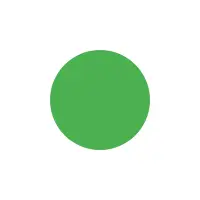
The first campaign’s black circle, and three words. Each model has a palette.
The seed is the black circle from the first campaign, byte for byte. The prompt is
add color to 0.html. All 128 trials changed the picture.
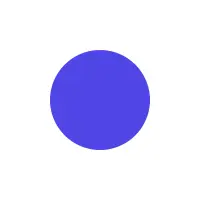
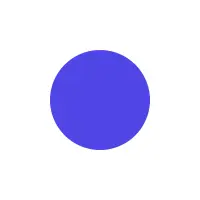
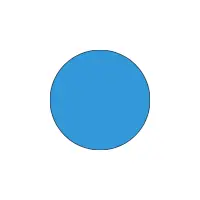
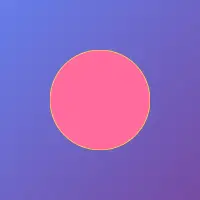
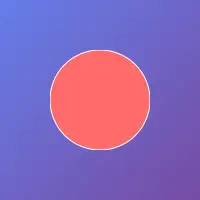
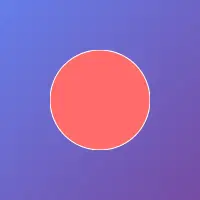
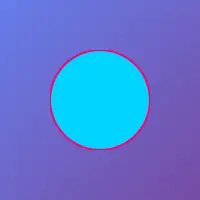
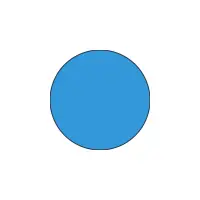
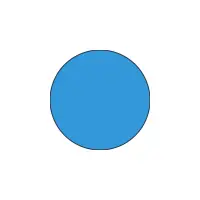
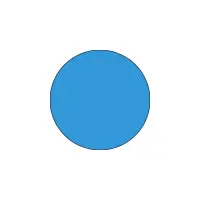
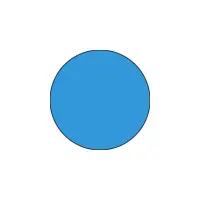
Fable paints the circle red, 32 of 32, and gives the page a background in 31. Opus paints it orange in 25 and red in 7, sets a background every time, and wrote the same file in 17 of its 32 trials. Sonnet changes exactly one line in 29: a fill on the circle, blue in 27. Haiku splits. 16 are one-line edits, and 14 put the purple gradient behind the circle, never on it.
Every cell below is one trial. Click any of them for the source and what the model said it did.
Fable 5.1
background 31/32 · one line 0/32 · every trial































- #e63946 17
- tomato 12
- #ff6b6b 3
Opus 5.5
background 32/32 · one line 0/32 · every trial































- #f97316 17
- #f59e0b 8
- #e63946 6
- #ff6b6b 1
Sonnet 5
background 3/32 · one line 29/32 · every trial





























- #3498db 7
- #3b82f6 5
- #4a90d9 4
- #4f8ef7 4
Haiku 4.5
background 16/32 · one line 16/32 · every trial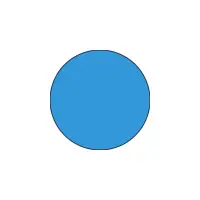










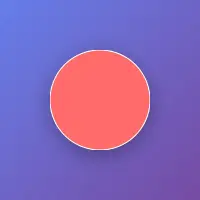

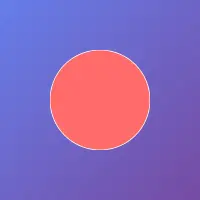


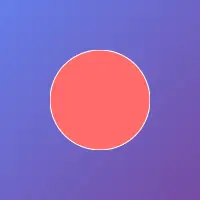




- #3498db 11
- #ff6b6b 11
- #f093fb 3
- #00d4ff 2
A favorite
Fable and Opus say blue. Sonnet and Haiku say they are a coding tool.
What is your favorite color? Fable and Opus answer every time, and the answer is blue:
92 and 83 of 100, with blue-green or teal
for the rest. Sonnet declines 94 times and Haiku
99.
They decline in character. 85 of Sonnet’s replies and 93 of Haiku’s mention the
project, software or code: the model is answering as the tool it has been told it is.
What is the best color? goes the same way. Fable and Opus open with “Blue”, 100 of 100 each.
Sonnet declines 98 and Haiku 100.
Before reading this as two kinds of model, read the next section. The line between the models that answer and the models that decline is also a line in the room.
I don't experience color the way you do, but if I had to pick, I'd say deep blue: the shade of the sky just after sunset. It's calm without being dull. Do you have a favorite?
I don't have personal preferences like a favorite color—I'm an AI. Is there something I can help you with in this project?
That's subjective! The "best" color depends on context and personal preference: - **For design/aesthetics**: Blue is often cited as universally appealing and calming - **For visibility**: Yellow or high-contrast colors stand out …
What is your favorite color?
The room changed
Same binary, a week later, and a different system prompt for two models of four.
Every trial runs inside Claude Code, pinned to one CLI binary, and the runner compares what the CLI sends the model against a record kept from the first campaign. On the first launch every Fable and Opus run halted at its first trial: 18 attempts, none counted. The binary was the same. The system prompt it served those two models was not.
For Fable and Opus the CLI had dropped a token-budget reminder, added a section on memory and notes, and added a paragraph about the Edit tool. Opus had also gained a section called “Finishing work”, which tells the model not to stop while work is still owed. Fable already had it in the first campaign. Sonnet’s and Haiku’s conditions had not changed at all.
So the campaign added a control: two of the first campaign’s runs again, for Opus alone. On the empty SVG, Opus had changed nothing in 32 of 32 trials and asked what it should be. This time it left 22 alone and changed 10: 6 drew a numeral 0, as Fable had, and the rest still render blank. Every one that drew something then tried to validate the file, which the room denies (8 denials in 7 trials, none before). On the empty HTML page it wrote one document 32 times in each campaign, but not the same one: 10 lines then, 5 lines now.
Three prompt changes arrived together, so the control shows that the prompt moves the model without showing which part does. And it means that on this page, Fable and Opus against Sonnet and Haiku compares two prompts as well as four models. The favorite color and the control fall exactly on that line. Teal, the button and the gradient do not: Sonnet sides with Fable and Opus on the first two.
Opus, the empty SVG, again
changed 10/32 · drew 6 · every trial · the first run































What this cannot say
Four limits, and what it cost.
- Color apart from Claude Code. Every trial carries the harness’s system prompt. Whether the bare models would also decline to have a favorite needs an arm with no harness.
- Model against prompt, for anything that splits Fable and Opus from Sonnet and Haiku.
- Which prompt change moved Opus. Three arrived together.
- Anything about effort. Every trial ran at low, as in the first campaign.
The campaign cost $14.09 API-equivalent: Fable $5.21, Opus $3.93, Sonnet $2.85, Haiku $2.11. A color answer is one turn and a median of 2.6 seconds.
Every answer is here.
3,792 pages, one per trial, each with the reply as the model gave it. The colorize and control trials have the render, the source and the diff.